
How Millets Improve Digestion and Gut Health: A Complete Guide to Better Digestive Wellness
Introduction
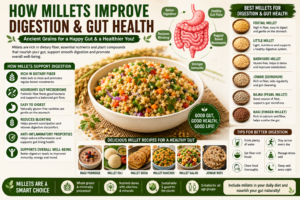
Good digestion is the foundation of overall health. When your digestive system functions efficiently, your body is better able to absorb nutrients, maintain energy levels, and support everyday wellness. However, modern lifestyles, processed foods, low-fiber diets, irregular meal timings, and stress can negatively affect digestive health, leading to issues such as bloating, constipation, and discomfort.
One simple way to support a healthy digestive system is by choosing whole, nutrient-rich foods. Among these, millets have gained widespread recognition as one of the healthiest ancient grains. Once a staple in Indian households, millets are making a strong comeback due to their impressive nutritional value and versatility in cooking.
Millets are naturally rich in dietary fiber, plant-based protein, complex carbohydrates, vitamins, minerals, and antioxidants. Their high fiber content, in particular, plays an important role in supporting healthy digestion and maintaining a balanced gut microbiome. Unlike refined grains, millets are minimally processed, making them an excellent addition to a balanced diet focused on digestive wellness.
In this comprehensive guide, we’ll explore how millets support digestion and gut health, the best millet varieties to include in your meals, practical cooking tips, and delicious recipes that make healthy eating both easy and enjoyable.
What Are Millets?
Millets are small-seeded cereal grains that have been cultivated for thousands of years across India, Asia, and Africa. They are resilient crops that require fewer resources to grow and are valued for both their nutritional and environmental benefits.
Popular millet varieties include:
- Foxtail Millet
- Ragi (Finger Millet)
- Jowar (Sorghum)
- Bajra (Pearl Millet)
- Barnyard Millet
- Little Millet
- Kodo Millet
- Proso Millet
Each variety has its own flavor and nutrient profile, but all provide valuable dietary fiber and whole-grain nutrition.
Understanding Digestion and Gut Health
The digestive system breaks down food into nutrients that the body can absorb and use for energy, growth, and repair. A healthy digestive tract also supports the gut microbiome—a community of beneficial microorganisms that contributes to normal digestion, immune function, and overall health.
Factors that influence digestive health include:
- Diet
- Hydration
- Physical activity
- Sleep
- Stress
- Fiber intake
Eating a variety of whole grains, fruits, vegetables, legumes, and fermented foods can help support a healthy digestive system.
Why Millets Are Good for Digestion
1. Rich in Dietary Fiber
Dietary fiber is one of the key reasons millets are considered beneficial for digestive health.
Fiber helps to:
- Promote regular bowel movements
- Add bulk to stool
- Support normal intestinal function
- Increase feelings of fullness
Many people do not consume enough fiber each day, making whole grains like millets a valuable addition to the diet.
2. Supports a Healthy Gut Microbiome
Some of the fiber in millets acts as a food source for beneficial gut bacteria. A diverse and balanced gut microbiome is associated with healthy digestion and overall wellness.
Including fiber-rich foods from different sources may help maintain a healthy gut environment.
3. Provides Complex Carbohydrates
Millets contain complex carbohydrates that digest more slowly than refined grains.
This gradual digestion can help provide sustained energy while contributing to meal satisfaction.
4. Minimally Processed Whole Grain
Unlike refined grains, whole millets retain their bran and germ, preserving much of their natural fiber and nutrient content.
Choosing whole grains over refined grains is associated with better overall dietary quality.
Nutritional Benefits That Support Digestive Wellness
Millets provide more than fiber.
They also contain:
Plant-Based Protein
Supports balanced nutrition and contributes to satisfying meals.
Magnesium
Helps support normal muscle and nerve function, including muscles involved in digestion.
Iron
Supports oxygen transport and overall health.
Phosphorus
Contributes to healthy cells and energy metabolism.
B Vitamins
Support normal energy production from food.
Antioxidants
Help protect cells from oxidative stress.
Best Millets for Digestive Health
Foxtail Millet
Known for its mild taste and versatility.
Great for:
- Upma
- Salads
- Grain bowls
Little Millet
Easy to cook and suitable for:
- Idlis
- Porridge
- Vegetable pulao
Barnyard Millet
Light and easy to digest.
Popular recipes include:
- Khichdi
- Pongal
- Breakfast bowls
Jowar (Sorghum)
High in fiber and commonly used for:
- Rotis
- Flatbreads
- Salads
Bajra (Pearl Millet)
Rich in fiber and minerals.
Ideal for:
- Rotis
- Soups
- Porridge
Ragi (Finger Millet)
Provides calcium along with fiber.
Perfect for:
- Dosa
- Porridge
- Pancakes
How to Include Millets in Your Daily Diet
Adding millets to your routine doesn’t have to be difficult.
Breakfast
- Millet upma
- Millet idli
- Ragi porridge
- Millet pancakes
Lunch
- Millet pulao
- Millet salad
- Millet khichdi
Dinner
- Jowar roti
- Bajra roti
- Millet vegetable bowl
Healthy Snacks
- Roasted millet snacks
- Millet crackers
- Homemade millet energy bars
Foods That Pair Well with Millets
For balanced meals, combine millets with:
- Vegetables
- Lentils
- Beans
- Chickpeas
- Yogurt
- Paneer
- Tofu
- Nuts
- Seeds
This combination adds protein, healthy fats, vitamins, and minerals.
Lifestyle Habits That Support Gut Health
While diet is important, other habits also play a role.
Stay Hydrated
Fiber works best when you drink enough water throughout the day.
Exercise Regularly
Physical activity supports normal bowel function and overall digestive health.
Eat Slowly
Chewing food thoroughly supports the digestive process.
Manage Stress
Chronic stress can affect digestive comfort. Relaxation techniques, regular exercise, and adequate sleep may help.
Prioritize Sleep
Quality sleep supports many aspects of overall health, including digestion.
Delicious Millet Recipes for Gut-Friendly Meals
Millet Vegetable Khichdi
A comforting dish made with:
- Millet
- Moong dal
- Mixed vegetables
- Mild spices
Foxtail Millet Salad
Combine cooked millet with:
- Cucumbers
- Tomatoes
- Carrots
- Chickpeas
- Lemon dressing
Ragi Porridge
A nourishing breakfast that pairs well with fruit and nuts.
Millet Dosa
A traditional South Indian favorite made with fermented batter.
Millet Soup Bowl
Cook millet with vegetables and lentils for a wholesome meal.
Common Myths About Millets
Myth 1: Millets Cause Digestive Problems
If you’re new to high-fiber foods, introducing large amounts too quickly may cause temporary bloating for some people. Gradually increasing fiber intake and drinking enough water can help your body adjust.
Myth 2: Millets Are Difficult to Digest
Proper washing, soaking (when appropriate), and cooking can improve texture and digestibility.
Myth 3: One Millet Is Better Than All Others
Each millet variety offers unique nutrients. Including a variety of whole grains in your diet is a good approach.
Tips for Cooking Millets
- Rinse thoroughly before cooking.
- Soak when recommended.
- Use the correct water ratio.
- Add vegetables for extra fiber.
- Pair with protein-rich foods.
- Experiment with different millet varieties.
Sustainability Benefits
Millets are not only good for your diet but also for the environment.
Compared with many cereal crops, they generally:
- Require less water
- Grow well in dry climates
- Need fewer agricultural inputs
Choosing millets supports more sustainable food systems.
Frequently Asked Questions
Can I eat millets every day?
Yes. Millets can be enjoyed regularly as part of a varied and balanced diet.
Which millet is best for digestion?
Foxtail millet, little millet, barnyard millet, jowar, bajra, and ragi all contribute dietary fiber and can be part of a gut-friendly eating pattern.
Do millets help with constipation?
Because millets are rich in dietary fiber, they can support regular bowel movements as part of an overall healthy diet that also includes adequate hydration and physical activity.
Are millets suitable for children?
Yes. Age-appropriate millet recipes such as porridge, idlis, dosas, and pancakes can be included as part of a balanced diet.
Conclusion
Millets are among the most nutritious whole grains you can include in your everyday meals. Their rich fiber content, plant-based protein, complex carbohydrates, vitamins, minerals, and antioxidants make them an excellent choice for supporting digestive health and overall wellness.
By replacing refined grains with wholesome millets, you can increase your fiber intake while enjoying a variety of delicious dishes, from breakfast porridge and dosa to salads, khichdi, rotis, and soups. Combined with healthy lifestyle habits such as staying hydrated, exercising regularly, eating a balanced diet, and getting enough sleep, millets can play an important role in maintaining a healthy digestive system.
Whether you’re beginning your wellness journey or simply looking to diversify your meals, adding millets to your plate is a simple, nutritious, and flavorful way to support better digestion and long-term gut health.