
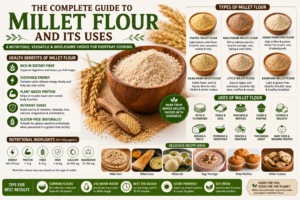
The Complete Guide to Millet Flour and Its Uses
Introduction
Millets have been a part of traditional diets for thousands of years, especially in India, where they were once considered everyday staples. Today, these ancient grains are making a remarkable comeback as more people embrace healthier, whole-food lifestyles. One of the easiest ways to enjoy their nutritional benefits is through millet flour, a versatile ingredient that can replace refined wheat flour in many recipes.
Millet flour is made by grinding whole millet grains into a fine powder. Depending on the type of millet used—such as foxtail millet, ragi, jowar, bajra, or little millet—the flour offers unique flavors, textures, and nutritional profiles. Rich in dietary fiber, plant-based protein, essential vitamins, and minerals, millet flour is increasingly being used in homes, bakeries, and restaurants to create healthier versions of traditional and modern dishes.
Whether you’re preparing rotis, dosas, pancakes, cookies, breads, or baked snacks, millet flour provides a nutritious alternative while adding a pleasant earthy flavor to your meals.
In this comprehensive guide, we’ll explore everything you need to know about millet flour, including its nutritional benefits, different types, culinary uses, storage tips, and delicious recipes you can try at home.
What Is Millet Flour?
Millet flour is produced by cleaning, drying, and grinding millet grains into a fine powder. Unlike refined flour, millet flour retains many of the nutrients naturally present in the grain, especially when made from whole millets.
Common types include:
- Foxtail Millet Flour
- Ragi (Finger Millet) Flour
- Jowar (Sorghum) Flour
- Bajra (Pearl Millet) Flour
- Little Millet Flour
- Barnyard Millet Flour
- Kodo Millet Flour
- Proso Millet Flour
Each variety has its own taste, texture, and culinary applications.
Nutritional Value of Millet Flour
Millet flour is packed with nutrients that contribute to overall health.
It contains:
- Complex carbohydrates
- Plant-based protein
- Dietary fiber
- Calcium (especially ragi flour)
- Iron
- Magnesium
- Potassium
- Phosphorus
- Zinc
- B Vitamins
- Natural antioxidants
These nutrients make millet flour a wholesome choice for balanced meals.
Health Benefits of Millet Flour
1. Rich in Dietary Fiber
Fiber is one of millet flour’s biggest strengths.
Benefits include:
- Supports healthy digestion
- Promotes gut health
- Helps you feel full longer
- Supports balanced eating habits
2. Provides Sustained Energy
Millet flour contains complex carbohydrates that release energy gradually, making it suitable for busy professionals, students, and active individuals.
3. Supports Healthy Weight Management
Because it is rich in fiber and relatively satisfying, millet flour can help reduce unnecessary snacking when included as part of a balanced diet.
4. Naturally Rich in Essential Minerals
Different millet flours contribute nutrients such as:
- Magnesium
- Iron
- Zinc
- Potassium
- Phosphorus
These minerals support normal body functions and overall wellness.
5. Naturally Gluten-Free
Pure millet flour is naturally gluten-free, making it an option for people who need or prefer gluten-free grains. However, always check labels for cross-contamination if you have celiac disease or a medically diagnosed gluten-related condition.
Different Types of Millet Flour
Foxtail Millet Flour
Foxtail millet flour has a mild flavor and smooth texture.
Best used for:
- Rotis
- Dosas
- Pancakes
- Baking
Ragi (Finger Millet) Flour
Ragi flour is well known for its high calcium content.
Ideal for:
- Porridge
- Malt drinks
- Rotis
- Cookies
- Cakes
Jowar Flour
Jowar flour is widely used across India.
Perfect for:
- Bhakri
- Rotis
- Flatbreads
- Baking
Bajra Flour
Bajra flour has a rich, earthy flavor.
Excellent for:
- Winter rotis
- Khakra
- Traditional breads
Little Millet Flour
A lighter flour suitable for:
- Dosas
- Idlis
- Pancakes
- Muffins
Everyday Uses of Millet Flour
One of the biggest advantages of millet flour is its versatility.
1. Rotis and Flatbreads
Millet flour can replace wheat flour completely or partially for making nutritious rotis.
Popular options include:
- Jowar roti
- Bajra roti
- Ragi roti
- Foxtail millet roti
2. Dosas
Millet flour works wonderfully in dosa batter.
Benefits:
- Crispy texture
- Nutritious breakfast
- Easy to prepare
3. Idlis
Mix millet flour with fermented batter for soft, healthy idlis.
4. Pancakes
Millet pancakes make an excellent breakfast.
Add:
- Bananas
- Honey
- Fresh fruits
- Nuts
5. Cookies
Millet flour adds nutrition and texture to homemade cookies.
6. Cakes
Blend millet flour with other flours to bake soft cakes with a wholesome flavor.
7. Muffins
Healthy muffins become even more nutritious with millet flour.
8. Bread
Millet flour can be combined with whole wheat or gluten-free flour blends for homemade bread.
9. Chapatis
Mix millet flour with wheat flour to gradually introduce it into your family’s diet.
10. Snacks
Prepare:
- Crackers
- Energy bars
- Savory biscuits
- Millet chips
How to Cook with Millet Flour
Cooking with millet flour is simple once you understand its texture.
Helpful tips:
- Mix with warm water for softer dough.
- Combine with other flours when baking.
- Avoid over-kneading.
- Add healthy fats like olive oil or ghee for improved texture.
Delicious Millet Flour Recipes
Ragi Porridge
A calcium-rich breakfast suitable for children and adults.
Foxtail Millet Dosa
A crispy South Indian favorite with extra nutrition.
Millet Pancakes
Perfect for busy mornings.
Top with:
- Berries
- Bananas
- Nut butter
Millet Cookies
Great for tea-time snacks.
Jowar Roti
A wholesome accompaniment to curries and dals.
Millet Banana Muffins
Soft, delicious, and ideal for lunch boxes.
Millet Flour for Different Age Groups
Children
Millet flour can be used in:
- Pancakes
- Porridge
- Dosas
- Cookies
to increase dietary variety.
Adults
Suitable for:
- Rotis
- Breakfast recipes
- Meal preparation
- Healthy baking
Older Adults
Soft preparations such as porridges, dosas, and idlis can be easy to enjoy while providing valuable nutrients.
Buying Good-Quality Millet Flour
Look for:
- Fresh aroma
- Natural color
- No artificial additives
- Reliable brands
- Airtight packaging
Stone-ground whole millet flour is often preferred for its nutritional value.
Storage Tips
Millet flour contains natural oils, so proper storage is important.
Store it:
- In an airtight container
- Away from direct sunlight
- In a cool, dry place
- In the refrigerator during hot weather
Always check for freshness before use.
Common Myths About Millet Flour
Myth 1: Millet Flour Is Difficult to Cook
With the right techniques, millet flour is easy to use in everyday recipes.
Myth 2: Millet Flour Is Only for Traditional Foods
Millet flour works well in modern recipes such as:
- Cakes
- Muffins
- Cookies
- Pancakes
- Pizza bases
Myth 3: Millet Flour Has No Flavor
Each millet variety offers its own pleasant, earthy taste that complements many dishes.
Sustainability Benefits
Millets are among the most environmentally sustainable grains.
Compared to many cereal crops, they generally:
- Require less water
- Grow well in dry climates
- Need fewer agricultural inputs
Choosing millet flour supports sustainable agriculture while encouraging dietary diversity.
Frequently Asked Questions
Can millet flour replace wheat flour completely?
For flatbreads, yes. In baking, combining millet flour with other flours often provides the best texture.
Is millet flour gluten-free?
Pure millet flour is naturally gluten-free. Check packaging if cross-contamination is a concern.
Which millet flour is best?
The best choice depends on the recipe:
- Ragi – Porridge and baking
- Jowar – Rotis
- Bajra – Traditional breads
- Foxtail – Dosas and pancakes
- Little Millet – Idlis and muffins
Can millet flour be used every day?
Yes. Millet flour can be enjoyed regularly as part of a varied and balanced diet.
Conclusion
Millet flour is a nutritious, versatile, and sustainable ingredient that deserves a place in every modern kitchen. Whether you’re making soft rotis, crispy dosas, fluffy pancakes, homemade cookies, or healthy baked treats, millet flour offers an easy way to include the goodness of ancient grains in your daily meals.
Rich in dietary fiber, plant-based protein, essential minerals, and complex carbohydrates, millet flour supports balanced nutrition while adding delicious flavor and variety to everyday cooking.
By experimenting with different millet varieties and recipes, you can enjoy wholesome meals that combine traditional wisdom with modern healthy eating. From breakfast to dinner—and even desserts—millet flour proves that nutritious food can also be flavorful, satisfying, and easy to prepare.