
Benefits of Millet Porridge for Children and Seniors: A Nutritious Meal for Every Stage of Life
Introduction
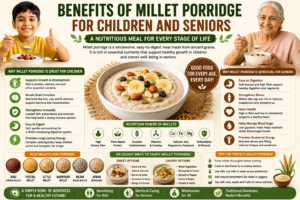
Healthy eating is important at every age, but nutritional needs vary throughout life. Children require balanced nutrition to support growth, learning, and active lifestyles, while older adults often benefit from foods that are easy to eat, nutrient-dense, and satisfying. One simple, wholesome meal that can fit into both age groups is millet porridge.
Millet porridge has been a traditional comfort food in many parts of India for generations. Made from ancient grains such as ragi (finger millet), foxtail millet, little millet, bajra (pearl millet), jowar (sorghum), or barnyard millet, it is warm, easy to prepare, and highly versatile. It can be served sweet or savory and customized with fruits, vegetables, nuts, seeds, or dairy alternatives to suit individual preferences.
Millets are naturally rich in dietary fiber, complex carbohydrates, plant-based protein, vitamins, minerals, and antioxidants. These nutrients make millet porridge a wholesome breakfast or light meal that supports balanced nutrition as part of a healthy lifestyle.
In this guide, we’ll explore the nutritional benefits of millet porridge, why it’s suitable for children and older adults, different millet varieties to use, simple preparation methods, and practical serving ideas.
What Is Millet Porridge?
Millet porridge is a soft, creamy dish prepared by cooking whole millets or millet flour with water, milk, or plant-based milk until smooth. Depending on regional traditions and personal taste, it can be enjoyed in many ways.
Popular millet varieties for porridge include:
- Ragi (Finger Millet)
- Foxtail Millet
- Little Millet
- Barnyard Millet
- Bajra (Pearl Millet)
- Jowar (Sorghum)
You can flavor millet porridge with fruits, cinnamon, cardamom, nuts, seeds, or vegetables to create a balanced meal.
Nutritional Value of Millet Porridge
Millet porridge provides a variety of nutrients that contribute to overall health.
It contains:
- Complex carbohydrates
- Dietary fiber
- Plant-based protein
- Iron
- Magnesium
- Potassium
- Zinc
- Phosphorus
- B Vitamins
- Antioxidants
The exact nutrient profile depends on the millet variety and additional ingredients used.
Why Millet Porridge Is a Great Choice for Children
Growing children need regular meals that provide energy and a variety of nutrients.
1. Provides Long-Lasting Energy
Millets contain complex carbohydrates that release energy gradually, making them a satisfying breakfast before school or activities.
2. Supports Balanced Nutrition
When combined with milk, yogurt, fruits, nuts, or seeds, millet porridge becomes a well-rounded meal with carbohydrates, protein, healthy fats, vitamins, and minerals.
3. Easy to Eat
Its soft texture makes porridge suitable for young children who are learning to enjoy a variety of foods.
Always prepare foods in an age-appropriate consistency and follow pediatric guidance for infants and toddlers.
4. Encourages Healthy Eating Habits
Introducing whole grains like millets early in life helps children become familiar with a wider variety of nutritious foods.
5. Naturally Versatile
Children often enjoy different flavors.
Try adding:
- Banana
- Apple
- Mango
- Berries
- Dates (as a natural sweetener)
- Cinnamon
Why Millet Porridge Is Beneficial for Older Adults
Older adults often appreciate meals that are nourishing and easy to consume.
1. Soft Texture
Millet porridge is gentle to chew and swallow compared with many solid foods.
2. Provides Fiber
Dietary fiber supports digestive health and regular bowel movements as part of a balanced diet.
3. Easy to Customize
Older adults can add:
- Yogurt
- Soft fruits
- Cooked vegetables
- Ground nuts
- Seeds
to suit their preferences and nutritional needs.
4. Supports Hydration
Because porridge contains a significant amount of liquid, it can contribute to overall fluid intake alongside drinking water.
5. Convenient Meal Option
Millet porridge is quick to prepare and works well for breakfast, light lunches, or evening meals.
Best Millets for Porridge
Ragi (Finger Millet)
Known for its naturally high calcium content.
Suitable for:
- Breakfast porridge
- Malt drinks
- Children’s recipes
Foxtail Millet
Mild in flavor and easy to digest.
Works well with:
- Fruits
- Nuts
- Milk
Little Millet
Soft texture and pleasant taste.
Ideal for:
- Creamy porridge
- Vegetable porridge
Barnyard Millet
Light and fluffy after cooking.
Perfect for savory recipes.
Bajra (Pearl Millet)
Has a rich, earthy flavor.
Pairs well with:
- Cardamom
- Jaggery
- Milk
Jowar (Sorghum)
Provides a hearty texture and works well in blended porridges.
Sweet Millet Porridge Recipe
Ingredients
- ½ cup millet
- 2 cups water
- 1 cup milk (or plant-based milk)
- Chopped banana
- Dates
- Almonds
- Cinnamon
Method
- Wash and cook the millet until soft.
- Add milk and stir well.
- Mix in chopped dates.
- Top with banana, almonds, and cinnamon.
- Serve warm.
Savory Millet Porridge Recipe
Ingredients
- Cooked millet
- Mixed vegetables
- Ginger
- Cumin
- Curry leaves
- Salt (adjust as appropriate)
- Water or vegetable stock
Method
- Sauté ginger, cumin, and curry leaves.
- Add vegetables and cook until tender.
- Stir in cooked millet.
- Add water or stock and simmer.
- Serve warm.
Healthy Toppings
Boost nutrition with:
Fruits
- Banana
- Apple
- Pear
- Mango
- Blueberries
Nuts
- Almonds
- Walnuts
- Pistachios
Seeds
- Chia seeds
- Flaxseeds
- Pumpkin seeds
Natural Flavorings
- Cinnamon
- Cardamom
- Nutmeg
Meal Planning with Millet Porridge
Millet porridge can fit into many eating patterns.
Breakfast
Serve with fruit and nuts.
Mid-Morning Snack
A smaller portion with yogurt.
Evening Meal
Prepare a savory version with vegetables.
Tips for Preparing Millet Porridge
- Wash millet thoroughly before cooking.
- Soak whole millet if needed to reduce cooking time.
- Stir regularly for a creamy texture.
- Add fruits after cooking for freshness.
- Avoid excessive added sugar.
- Adjust consistency based on age and preference.
Common Myths About Millet Porridge
Myth 1: Porridge Is Only for Babies
Millet porridge is suitable for people of all ages and can be customized in many ways.
Myth 2: Porridge Is Bland
Fresh fruits, spices, vegetables, herbs, and nuts make millet porridge flavorful and enjoyable.
Myth 3: One Type of Millet Is Enough
Rotating different millet varieties increases dietary diversity and introduces different nutrients and flavors.
Sustainable and Budget-Friendly
Millets are environmentally friendly because they generally require less water than many cereal crops and grow well in diverse climates.
They are also affordable, making them a practical option for families looking to prepare nutritious meals on a budget.
Frequently Asked Questions
Can children eat millet porridge daily?
Millet porridge can be included regularly as part of a varied, balanced diet. Offering different grains and foods throughout the week is also beneficial.
Which millet is best for porridge?
Ragi, foxtail millet, little millet, barnyard millet, bajra, and jowar all work well. The best choice depends on taste and recipe.
Is millet porridge suitable for older adults?
Yes. Its soft texture and versatility make it a convenient meal for many seniors.
Can I prepare millet porridge in advance?
Yes. Store cooked porridge in the refrigerator and reheat with additional water or milk to restore a creamy consistency.
Conclusion
Millet porridge is a timeless, nourishing meal that offers benefits for both children and older adults. Its soft texture, versatility, and rich nutritional profile make it a convenient option for busy mornings, light meals, or comforting dinners.
Whether prepared with ragi, foxtail millet, bajra, jowar, little millet, or barnyard millet, porridge provides dietary fiber, complex carbohydrates, plant-based protein, vitamins, minerals, and antioxidants that contribute to balanced nutrition. By adding fruits, vegetables, nuts, or seeds, you can create delicious variations that suit different tastes and nutritional needs.
Including millet porridge as part of a varied, balanced diet is a simple way to enjoy the goodness of ancient grains while supporting healthy eating habits across generations. From growing children to active seniors, this wholesome dish remains one of the easiest and most satisfying ways to bring the power of millets to the family table.