
Can Millets Help Manage Blood Sugar Levels? A Complete Guide to Their Benefits
Introduction
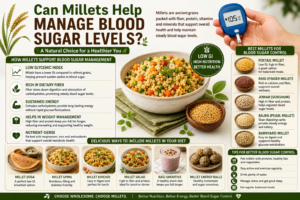
Managing blood sugar levels has become a growing health priority for millions of people worldwide. Sedentary lifestyles, processed foods, irregular eating habits, and increasing stress have contributed to a rise in blood sugar-related health concerns. While no single food can prevent or cure these conditions, choosing nutrient-rich whole grains as part of a balanced diet may help support healthy blood sugar management.
Among these grains, millets have gained significant attention from nutritionists, health experts, and food enthusiasts. Once a staple in traditional Indian kitchens, millets are making a strong comeback because of their impressive nutritional profile and versatility. Rich in dietary fiber, plant-based protein, vitamins, minerals, and antioxidants, these ancient grains are considered a healthier alternative to refined cereals in many diets.
One of the main reasons millets have become popular is their ability to provide slow and steady energy. Many millet varieties have a lower glycemic index than refined grains, meaning they are generally digested more slowly and may help reduce rapid spikes in blood glucose when eaten as part of a balanced meal.
In this blog, we’ll explore how millets can support healthy blood sugar management, their nutritional benefits, the best millet varieties to include in your diet, and practical ways to enjoy them every day.
What Are Millets?
Millets are small-seeded cereal grains cultivated for thousands of years across India, Asia, and Africa. They are naturally rich in nutrients and adapt well to different climates, making them an environmentally sustainable crop.
Common varieties include:
- Ragi (Finger Millet)
- Foxtail Millet
- Jowar (Sorghum)
- Bajra (Pearl Millet)
- Barnyard Millet
- Little Millet
- Kodo Millet
- Proso Millet
Each variety offers unique nutritional benefits while contributing valuable fiber, vitamins, minerals, and complex carbohydrates.
Understanding Blood Sugar Levels
Blood sugar, also called blood glucose, is the body’s primary source of energy. It comes mainly from carbohydrates in food.
After eating:
- Carbohydrates are broken down into glucose.
- Glucose enters the bloodstream.
- The body releases insulin to help move glucose into cells for energy.
Meals high in refined carbohydrates and added sugars may cause blood sugar to rise quickly, followed by a rapid drop. Choosing foods that digest more slowly can help provide steadier energy throughout the day.
Why Millets Are Considered a Better Grain Choice
Millets differ from refined grains because they are minimally processed and naturally nutrient-dense.
Key nutritional advantages include:
- High dietary fiber
- Plant-based protein
- Complex carbohydrates
- Essential minerals
- Antioxidants
These qualities make them a satisfying and wholesome addition to many healthy eating patterns.
1. Rich in Dietary Fiber
One of the biggest advantages of millets is their fiber content.
Fiber helps:
- Slow digestion
- Promote fullness
- Support digestive health
- Encourage gradual absorption of carbohydrates
Meals containing fiber-rich foods may contribute to more stable energy levels throughout the day.
2. Lower Glycemic Index Than Many Refined Grains
The glycemic index (GI) measures how quickly carbohydrate-containing foods raise blood sugar.
Many millet varieties have a lower GI than refined white rice or products made with refined flour. Foods with a lower GI are generally digested more slowly, which may help reduce sharp increases in blood glucose after meals.
Keep in mind that the GI of a meal also depends on portion size, cooking method, and what foods are eaten alongside it.
3. Provides Slow-Releasing Energy
Millets contain complex carbohydrates that release energy gradually.
Benefits include:
- Longer-lasting energy
- Reduced mid-day energy crashes
- Better satiety
- Improved meal satisfaction
This makes millet-based meals suitable for busy professionals, students, and active individuals.
4. Supports Healthy Weight Management
Maintaining a healthy weight is one factor that can contribute to better overall metabolic health.
Millets may support weight management because they:
- Keep you full longer
- Reduce frequent snacking
- Provide satisfying meals
- Contain fiber and protein
When combined with regular physical activity and balanced nutrition, these qualities can support healthy lifestyle goals.
5. Provides Essential Nutrients
Millets are naturally rich in:
- Magnesium
- Iron
- Phosphorus
- Potassium
- B Vitamins
- Zinc
These nutrients contribute to normal body functions, including energy metabolism and overall wellness.
Best Millets for Blood Sugar-Friendly Meals
Foxtail Millet
Foxtail millet is a popular choice for people looking to include whole grains in balanced meals.
Use it in:
- Upma
- Pulao
- Salads
- Breakfast bowls
Ragi (Finger Millet)
Ragi is valued for its calcium and fiber content.
Popular dishes:
- Ragi dosa
- Ragi porridge
- Ragi roti
Jowar (Sorghum)
Jowar is a versatile whole grain used in:
- Rotis
- Grain bowls
- Soups
It provides fiber and plant-based nutrients.
Bajra (Pearl Millet)
Bajra offers:
- Fiber
- Protein
- Iron
- Magnesium
Ideal for:
- Rotis
- Khichdi
- Porridge
Barnyard Millet
Barnyard millet is light, nutritious, and works well in:
- Pongal
- Pilaf
- Vegetable bowls
Healthy Ways to Include Millets in Your Diet
Replacing refined grains with whole grains can increase dietary variety and nutrient intake.
Breakfast
- Millet dosa
- Millet idli
- Ragi porridge
- Millet upma
Lunch
- Millet pulao
- Millet salad
- Millet khichdi
Dinner
- Jowar roti
- Bajra roti
- Millet vegetable bowl
Snacks
- Roasted millet snacks
- Millet energy bars
- Millet crackers
Foods That Pair Well with Millets
A balanced meal helps improve overall nutrition.
Pair millets with:
- Vegetables
- Lentils
- Beans
- Paneer
- Tofu
- Eggs
- Fish
- Yogurt
- Nuts
- Seeds
Combining protein, healthy fats, and fiber with millets can make meals more satisfying.
Lifestyle Habits That Support Healthy Blood Sugar
Food is only one part of a healthy lifestyle.
Other helpful habits include:
- Regular physical activity
- Adequate sleep
- Stress management
- Staying hydrated
- Eating regular, balanced meals
Together, these habits support overall metabolic health.
Common Myths About Millets
Myth 1: Millets Can Cure Diabetes
Millets are nutritious foods, but they are not a cure for diabetes or any medical condition. They should be part of an overall healthy eating plan and any dietary changes should follow your healthcare provider’s advice.
Myth 2: You Can Eat Unlimited Millets
Portion size still matters. Even nutritious grains contain carbohydrates, so moderation is important.
Myth 3: All Millet Recipes Are Healthy
Recipes made with excessive oil, sugar, or highly processed ingredients may reduce the overall nutritional value. Focus on minimally processed, balanced meals.
Tips for Cooking Millets
- Wash thoroughly before cooking.
- Soak when appropriate to reduce cooking time.
- Cook with vegetables for added fiber.
- Pair with protein-rich foods.
- Experiment with different millet varieties for variety and flavor.
Sustainability Benefits
Millets are also environmentally friendly.
Compared to many other cereal crops, they generally:
- Require less water
- Grow well in dry conditions
- Need fewer agricultural inputs
Choosing millets supports both personal health and sustainable farming.
Conclusion
Millets are nutrient-rich ancient grains that deserve a place in modern diets. Their combination of dietary fiber, plant-based protein, complex carbohydrates, vitamins, and minerals makes them an excellent alternative to refined grains.
Many millet varieties have a lower glycemic index than refined cereals and provide slow-releasing energy, making them a smart choice as part of a balanced eating pattern for people looking to support healthy blood sugar levels.
However, no single food can manage blood sugar on its own. A healthy lifestyle—including balanced meals, regular exercise, sufficient sleep, and guidance from a healthcare professional—is essential.
By incorporating wholesome millet dishes such as dosa, idli, khichdi, porridge, rotis, and grain bowls into your routine, you can enjoy delicious meals while adding more nutrition and variety to your diet.
Frequently Asked Questions
Are millets better than white rice for blood sugar management?
Many millet varieties have a lower glycemic index and higher fiber content than refined white rice, which may support steadier blood sugar responses as part of a balanced diet.
Which millet is best?
Foxtail millet, ragi, jowar, bajra, and barnyard millet are all nutritious choices. The best option depends on your preferences and overall dietary needs.
Can people with diabetes eat millets?
Many people with diabetes include millets in their meal plans, but portion size and overall carbohydrate intake matter. It’s best to follow advice from a doctor or registered dietitian.