
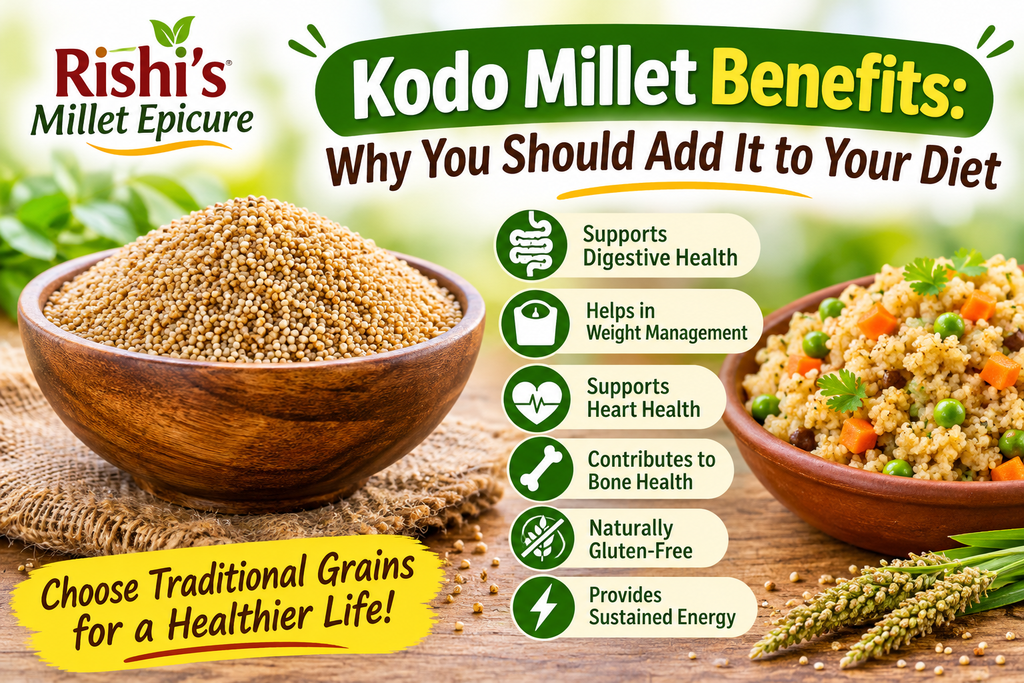
Healthy eating starts with choosing the right ingredients. While rice and wheat are common staples in Indian households, traditional grains like millets are gaining popularity because of their nutritional value and versatility. One such nutritious grain is Kodo millet, an ancient millet that has been part of traditional Indian diets for generations.
Kodo millet is known for its dietary fibre, plant-based nutrients, and versatility in everyday cooking. Whether you want to explore healthier food options, add variety to your meals, or discover traditional grains, Kodo millet can be a valuable addition to your kitchen.
In this article, let’s explore the major Kodo millet benefits, nutritional properties, cooking methods, and simple ways to include it in your daily diet.
What Is Kodo Millet?
Kodo millet, scientifically known as Paspalum scrobiculatum, is a small-seeded cereal grain cultivated in India and other parts of the world. It is also known as Kodra in Hindi and Arikelu in Telugu.
This traditional millet has a slightly nutty flavour and can be used in several Indian recipes. It is commonly prepared as a rice alternative and can also be used in upma, khichdi, pulao, porridge, and other healthy dishes.
Kodo millet is naturally gluten-free and provides dietary fibre along with important minerals. Its versatility makes it suitable for people looking to diversify their regular grain consumption.
Nutritional Value of Kodo Millet
Kodo millet contains several nutrients that contribute to a balanced diet. Its nutritional composition may vary depending on the variety, growing conditions, and processing method.
Some of its nutritional components include:
- Dietary fibre: Supports digestive health and helps promote fullness.
- Complex carbohydrates: Provide energy for everyday activities.
- Plant-based protein: Contributes to normal body functions and tissue maintenance.
- Iron: Supports normal red blood cell production.
- Calcium: Helps maintain healthy bones and teeth.
- Antioxidant compounds: Help protect cells from oxidative stress.
Including Kodo millet as part of a varied and balanced diet can help increase your intake of whole grains and essential nutrients.
Top 7 Kodo Millet Benefits
1. Supports Digestive Health
One of the important Kodo millet benefits is its dietary fibre content. Fibre plays an essential role in maintaining regular bowel movements and supporting a healthy digestive system.
Including fibre-rich foods in your daily meals can help support gut health and improve overall digestive function. Kodo millet can be a useful alternative to refined grains when prepared as part of a balanced diet.
2. Helps Support Weight Management
Kodo millet can be a helpful addition to a weight-conscious diet because it contains dietary fibre and complex carbohydrates.
Fibre-rich meals may help you feel satisfied for longer, potentially reducing unnecessary snacking between meals. Replacing some refined grain dishes with appropriately portioned millet-based meals can also increase dietary variety.
However, weight management depends on overall calorie intake, physical activity, sleep, and lifestyle habits rather than one particular food.
3. Provides Sustained Energy
Kodo millet contains complex carbohydrates that provide energy for daily activities.
Unlike meals that rely heavily on refined carbohydrates, a balanced meal containing whole grains, vegetables, and protein can support more consistent energy levels.
Kodo millet can be included in breakfast, lunch, or dinner to create satisfying and nutritious meals.
4. Supports Heart Health
A balanced diet rich in whole grains and dietary fibre is an important part of maintaining cardiovascular health.
Kodo millet can contribute to this dietary pattern by providing fibre and plant-based nutrients. Replacing some refined grains with whole grains may support better overall dietary quality.
For heart health, combine millet dishes with vegetables, legumes, nuts, seeds, and healthy fats.
5. Naturally Gluten-Free
Kodo millet is naturally gluten-free, making it an alternative grain for people who need to avoid gluten.
It can be used to prepare millet dosa, upma, khichdi, and other traditional dishes.
People with celiac disease should ensure that the millet is certified gluten-free and has not been cross-contaminated during processing, storage, or preparation.
6. Contributes to Bone Health
Kodo millet contains minerals, including calcium and phosphorus, which contribute to maintaining healthy bones and teeth.
These nutrients play important roles in normal bone structure and development.
Although Kodo millet can contribute to mineral intake, maintaining bone health also requires adequate vitamin D, physical activity, and a balanced diet.
7. Adds Antioxidant-Rich Plant Nutrients
Millets contain various plant compounds, including phenolic compounds, that have antioxidant properties.
Antioxidants help protect cells against oxidative stress. Including different whole grains, fruits, vegetables, nuts, and seeds in your diet can increase your intake of beneficial plant compounds.
Kodo millet is one way to introduce more variety into a nutritious eating pattern.
Kodo Millet vs Regular Rice: Which Is Better?
Many people consider Kodo millet as an alternative to regular white rice. Both foods provide carbohydrates and can be included in a balanced diet.
However, Kodo millet generally offers more dietary fibre than polished white rice, depending on the variety and processing method.
Here is a simple comparison:
| Feature | Kodo Millet | White Rice |
|---|---|---|
| Gluten | Naturally gluten-free | Naturally gluten-free |
| Fibre | Generally higher | Generally lower |
| Carbohydrates | Present | Present |
| Minerals | Contains several minerals | Varies with processing |
| Uses | Dosa, upma, khichdi, pulao | Rice, idli, dosa |
The better choice depends on your nutritional needs, portion sizes, cooking methods, and overall dietary pattern. Both can be part of a healthy meal plan.
How to Include Kodo Millet in Your Daily Diet
One of the biggest advantages of Kodo millet is its versatility. You can use it in several delicious Indian recipes.
Here are some easy ideas:
1. Kodo Millet Upma: Prepare a nutritious breakfast using Kodo millet, vegetables, curry leaves, mustard seeds, and spices.
2. Kodo Millet Khichdi: Combine Kodo millet with moong dal, vegetables, and mild spices for a comforting meal.
3. Kodo Millet Pulao: Cook it with mixed vegetables and aromatic spices for a wholesome lunch.
4. Kodo Millet Dosa: Use soaked and ground Kodo millet with suitable ingredients to prepare delicious homemade dosas.
5. Kodo Millet Porridge: Cook the grain until soft and prepare a nutritious breakfast with milk or other preferred ingredients.
Tips for Cooking Kodo Millet
Follow these simple tips to get the best results when preparing Kodo millet:
- Wash the millet thoroughly before cooking.
- Soak it for approximately 20–30 minutes to help reduce cooking time.
- Use an appropriate water-to-millet ratio depending on your preferred texture.
- Cook until the grains become soft and fluffy.
- Combine it with vegetables, pulses, and protein-rich foods.
- Store uncooked millet in an airtight container in a cool, dry place.
Cooking time and water requirements can vary depending on the millet variety and whether it is whole or processed.
Who Can Include Kodo Millet in Their Diet?
Kodo millet can be included by people who want to explore traditional grains and improve the variety of their meals.
It may be suitable for:
- Individuals looking for alternatives to polished white rice.
- People interested in fibre-rich foods.
- Families exploring traditional Indian grains.
- Individuals following a gluten-free diet.
- People looking for nutritious breakfast and lunch options.
If you have specific dietary restrictions or medical conditions, consult a qualified healthcare professional or registered dietitian before making significant dietary changes.
Conclusion
Kodo millet is a nutritious traditional grain that deserves a place in modern Indian kitchens. From supporting digestive health to contributing dietary fibre, minerals, and plant-based nutrients, its nutritional qualities make it a useful addition to a balanced diet.
Whether you prepare Kodo millet upma, dosa, khichdi, pulao, or porridge, there are plenty of delicious ways to enjoy this versatile grain.
If you are looking to explore traditional millet-based foods and make healthier everyday food choices, discover the range of millet products from Rishi’s Millet Epicure. Make traditional grains a delicious part of your modern lifestyle!
Choose better grains. Eat mindfully. Live healthier with Rishi’s Millet Epicure.