
Different Types of Millets and Their Nutritional Benefits
Introduction
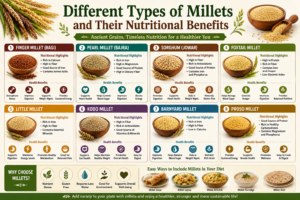
Millets are among the oldest cultivated grains in the world and have been an integral part of Indian agriculture and cuisine for thousands of years. Often referred to as “ancient supergrains,” millets are packed with essential nutrients, making them an excellent choice for a healthy lifestyle.
With growing awareness about nutrition and sustainable eating, millets are once again becoming popular in Indian households. They are naturally rich in fiber, protein, vitamins, minerals, and antioxidants, making them a nutritious alternative to refined grains like white rice and wheat.
India is home to several varieties of millets, each offering unique health benefits. Understanding the different types of millets and their nutritional value can help you choose the right grain for your daily diet.
What Are Millets?
Millets are small-seeded cereal grains that belong to the grass family. They are highly adaptable crops that require less water and can grow in harsh climatic conditions. Millets are naturally gluten-free and are known for their excellent nutritional profile.
Some of the most popular millets consumed in India include:
- Finger Millet (Ragi)
- Pearl Millet (Bajra)
- Sorghum (Jowar)
- Foxtail Millet
- Little Millet
- Kodo Millet
- Barnyard Millet
- Proso Millet
1. Finger Millet (Ragi)
Nutritional Highlights
- Rich in Calcium
- High in Dietary Fiber
- Good Source of Iron
- Contains Essential Amino Acids
Health Benefits
Ragi is one of the most nutritious millets and is especially known for its high calcium content. It helps support strong bones and teeth and is often recommended for children, pregnant women, and older adults.
Benefits include:
- Supports bone health
- Aids weight management
- Promotes healthy digestion
- Provides sustained energy
Popular Uses
- Ragi Dosa
- Ragi Porridge
- Ragi Roti
- Ragi Malt
2. Pearl Millet (Bajra)
Nutritional Highlights
- Rich in Iron
- High in Magnesium
- Good Source of Protein
- Contains Dietary Fiber
Health Benefits
Bajra is widely consumed across India and is known for its energy-boosting properties.
Benefits include:
- Supports heart health
- Helps maintain healthy blood sugar levels
- Improves digestion
- Provides long-lasting energy
Popular Uses
- Bajra Roti
- Bajra Khichdi
- Bajra Porridge
3. Sorghum (Jowar)
Nutritional Highlights
- High in Fiber
- Rich in Antioxidants
- Good Source of Protein
- Contains Iron and Phosphorus
Health Benefits
Jowar is a versatile millet that supports overall health.
Benefits include:
- Promotes digestive health
- Supports heart wellness
- Helps with weight management
- Naturally gluten-free
Popular Uses
- Jowar Roti
- Jowar Flour
- Jowar Snacks
4. Foxtail Millet
Nutritional Highlights
- High in Protein
- Rich in Fiber
- Contains Iron and Copper
- Low Glycemic Index
Health Benefits
Foxtail millet is increasingly popular among health-conscious consumers.
Benefits include:
- Supports blood sugar management
- Helps control hunger
- Improves digestion
- Provides balanced nutrition
Popular Uses
- Foxtail Millet Upma
- Foxtail Millet Dosa
- Millet Rice
5. Little Millet
Nutritional Highlights
- Rich in Iron
- High in Fiber
- Contains Essential Minerals
Health Benefits
Little millet is a nutritious substitute for rice.
Benefits include:
- Supports digestive health
- Helps maintain energy levels
- Promotes healthy metabolism
- Suitable for balanced diets
Popular Uses
- Little Millet Pongal
- Little Millet Pulav
- Little Millet Upma
6. Kodo Millet
Nutritional Highlights
- High Fiber Content
- Rich in Antioxidants
- Good Source of Vitamins and Minerals
Health Benefits
Kodo millet is known for its digestive and nutritional benefits.
Benefits include:
- Supports gut health
- Helps maintain healthy weight
- Promotes balanced nutrition
- Easy to digest
Popular Uses
- Kodo Millet Khichdi
- Kodo Millet Dosa
- Kodo Millet Rice
7. Barnyard Millet
Nutritional Highlights
- Rich in Iron
- High in Fiber
- Low in Calories
Health Benefits
Barnyard millet is a light and nutritious grain.
Benefits include:
- Supports healthy digestion
- Helps maintain blood sugar balance
- Assists in weight management
- Provides essential nutrients
Popular Uses
- Barnyard Millet Upma
- Barnyard Millet Pongal
- Millet Salads
8. Proso Millet
Nutritional Highlights
- Good Source of Protein
- Rich in Healthy Carbohydrates
- Contains Magnesium and Phosphorus
Health Benefits
Proso millet is valued for its energy-supporting nutrients.
Benefits include:
- Provides sustained energy
- Supports muscle health
- Promotes overall wellness
- Easy to cook and digest
Popular Uses
- Proso Millet Rice
- Millet Pilaf
- Healthy Snacks
Nutritional Comparison of Popular Millets
| Millet | Key Nutrient | Main Benefit |
|---|---|---|
| Ragi | Calcium | Strong Bones |
| Bajra | Iron | Energy & Wellness |
| Jowar | Fiber | Better Digestion |
| Foxtail Millet | Protein | Weight Management |
| Little Millet | Iron | Healthy Metabolism |
| Kodo Millet | Fiber | Gut Health |
| Barnyard Millet | Iron | Blood Sugar Support |
| Proso Millet | Protein | Sustained Energy |
Why You Should Include Different Millets in Your Diet
Each millet offers unique nutritional advantages. Rotating different millet varieties in your meals helps provide a broader range of vitamins and minerals.
Benefits of a Millet-Rich Diet
- Rich source of natural nutrients
- Supports digestive health
- Helps maintain healthy weight
- Promotes heart wellness
- Naturally gluten-free
- Provides long-lasting energy
- Supports sustainable agriculture
Easy Ways to Add Millets to Your Meals
Breakfast
- Millet Dosa
- Millet Idli
- Millet Pancakes
- Millet Porridge
Lunch
- Millet Rice
- Millet Pulav
- Millet Khichdi
Dinner
- Millet Rotis
- Millet Pongal
- Millet Upma
Snacks
- Millet Cookies
- Millet Energy Bars
- Roasted Millet Mixes
Conclusion
Millets are truly nature’s gift for healthy living. Their exceptional nutritional value, versatility, and environmental sustainability make them one of the best food choices for modern lifestyles.
From calcium-rich ragi to protein-packed foxtail millet and fiber-rich jowar, every millet variety brings its own unique health benefits. Including a variety of millets in your daily diet can help improve nutrition, support overall wellness, and reconnect you with India’s rich culinary heritage.
As more people embrace healthy and sustainable eating, millets are once again becoming an essential part of Indian kitchens.