
Top 10 Health Benefits of Eating Millets Daily
Introduction
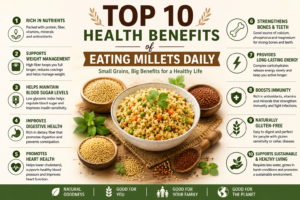
In today’s fast-paced world, maintaining a healthy lifestyle has become more important than ever. With increasing concerns about obesity, diabetes, heart disease, digestive disorders, and nutrient deficiencies, people are actively searching for natural and wholesome foods that support overall well-being. Among the many superfoods gaining popularity, millets stand out as one of the most nutritious and sustainable grains available.
Millets have been a part of Indian agriculture and cuisine for thousands of years. Before rice and wheat became dominant staples, millets were widely consumed across different regions of the country. These ancient grains were valued for their nutritional richness, ability to grow in challenging climates, and versatility in cooking.
Today, millets are making a strong comeback in Indian kitchens and around the world. Health experts, nutritionists, and fitness enthusiasts recommend including millets in daily diets because of their exceptional health benefits. Rich in fiber, protein, vitamins, minerals, and antioxidants, millets offer a powerful combination of nutrients that support overall health and wellness.
Whether consumed as dosa, idli, roti, porridge, khichdi, pancakes, or snacks, millets can be easily incorporated into everyday meals. This article explores the top 10 health benefits of eating millets daily and why they deserve a place on your plate.
1. Rich Source of Essential Nutrients
One of the biggest advantages of millets is their impressive nutritional profile. Unlike refined grains that lose many nutrients during processing, millets retain much of their natural goodness.
Millets contain:
- High-quality protein
- Dietary fiber
- Iron
- Calcium
- Magnesium
- Potassium
- Zinc
- Phosphorus
- B-complex vitamins
- Antioxidants
Different varieties of millets provide different nutritional benefits.
For example:
- Ragi (Finger Millet) is rich in calcium.
- Bajra (Pearl Millet) contains iron and magnesium.
- Foxtail Millet is high in protein and fiber.
- Jowar (Sorghum) offers antioxidants and essential minerals.
Regular consumption of millets helps meet daily nutritional requirements naturally and supports overall physical and mental health.
2. Supports Healthy Weight Management
Weight management is a common goal for many people today. One of the most effective ways to maintain a healthy weight is by consuming foods that keep you full for longer periods.
Millets are rich in dietary fiber, which slows digestion and increases feelings of fullness. This helps reduce unnecessary hunger and prevents overeating.
Benefits of millets for weight management include:
- Improved satiety
- Reduced cravings
- Better appetite control
- Lower calorie intake
- Enhanced digestion
Unlike refined carbohydrates that cause sudden spikes in blood sugar and hunger, millets release energy gradually, helping maintain stable energy levels throughout the day.
People trying to lose or maintain weight often find millet-based meals more satisfying than meals made from refined grains.
3. Helps Maintain Healthy Blood Sugar Levels
The rising prevalence of diabetes has increased awareness about choosing healthier carbohydrate sources.
Millets are considered beneficial because they have a lower glycemic index compared to polished rice and refined wheat products.
Foods with a low glycemic index release glucose slowly into the bloodstream, helping prevent sudden spikes in blood sugar levels.
This gradual release of energy:
- Supports balanced glucose levels
- Reduces energy crashes
- Promotes sustained energy
- Helps control hunger
Including millets as part of a balanced diet may support healthier blood sugar management and improve overall metabolic health.
This is one of the primary reasons why health-conscious individuals are increasingly choosing millet-based foods.
4. Improves Digestive Health
A healthy digestive system is essential for overall well-being. Poor digestion can affect nutrient absorption, immunity, and energy levels.
Millets are naturally rich in dietary fiber, which plays a vital role in maintaining digestive health.
Fiber helps:
- Promote regular bowel movements
- Prevent constipation
- Support healthy gut bacteria
- Improve digestion
- Enhance nutrient absorption
A healthy gut contributes to better overall health and may help reduce digestive discomfort.
Since modern diets often lack sufficient fiber, adding millets can significantly improve digestive function and support long-term wellness.
5. Promotes Heart Health
Heart disease remains one of the leading health concerns worldwide. Diet plays a major role in maintaining cardiovascular health, and millets contain several nutrients that support heart function.
Millets provide:
- Magnesium
- Potassium
- Fiber
- Antioxidants
These nutrients contribute to:
- Healthy circulation
- Balanced cholesterol levels
- Healthy blood pressure
- Reduced oxidative stress
The fiber present in millets may help support healthy cholesterol management, while antioxidants help protect cells from damage caused by free radicals.
When combined with regular exercise and a balanced diet, millets can be a valuable addition to a heart-friendly lifestyle.
6. Strengthens Bones and Teeth
Strong bones are essential for mobility, physical activity, and overall quality of life.
Certain millet varieties, particularly ragi, are among the richest plant-based sources of calcium.
Calcium plays an important role in:
- Bone development
- Bone density maintenance
- Healthy teeth
- Muscle function
- Nerve transmission
Regular consumption of calcium-rich foods is important for:
- Growing children
- Teenagers
- Pregnant women
- Older adults
Including ragi and other nutrient-rich millets in daily meals can contribute to stronger bones and better skeletal health.
7. Provides Long-Lasting Energy
Many people rely on sugary snacks and processed foods for quick energy, but these often lead to energy crashes shortly afterward.
Millets provide a healthier alternative because they are complex carbohydrates that release energy gradually.
Benefits include:
- Sustained energy levels
- Improved stamina
- Better concentration
- Reduced fatigue
- Enhanced productivity
This makes millets an excellent choice for:
- Students
- Working professionals
- Athletes
- Fitness enthusiasts
A millet-based breakfast can help maintain energy and focus throughout the day without causing sudden fluctuations in blood sugar levels.
8. Supports a Strong Immune System
A strong immune system helps protect the body from illness and supports overall wellness.
Millets contain a variety of nutrients that contribute to immune health, including:
- Zinc
- Iron
- Magnesium
- Antioxidants
- Essential vitamins
These nutrients support various bodily functions and help maintain healthy immune responses.
Antioxidants found in millets help combat oxidative stress, which can damage cells and contribute to various health issues.
By providing essential nutrients and protective compounds, millets support overall health and resilience.
9. Naturally Gluten-Free
As awareness of gluten sensitivity and digestive health grows, more people are seeking gluten-free alternatives.
Millets are naturally gluten-free and serve as an excellent substitute for wheat-based foods.
Benefits of gluten-free millets include:
- Easier digestion for sensitive individuals
- Greater dietary diversity
- Nutrient-rich grain alternatives
- Suitable options for specialized diets
Millets can be used in a wide range of recipes, including:
- Rotis
- Dosas
- Idlis
- Pancakes
- Porridges
- Cookies
- Snacks
This versatility makes it easy to enjoy healthy and delicious meals without relying on refined ingredients.
10. Supports Sustainable Living and Environmental Health
One of the unique advantages of millets is that they benefit not only human health but also the environment.
Compared to many conventional crops, millets require:
- Less water
- Fewer fertilizers
- Reduced pesticide use
- Lower agricultural inputs
Millets are highly resilient and can grow in challenging conditions, including drought-prone regions.
Environmental benefits of millet cultivation include:
- Water conservation
- Improved soil health
- Reduced carbon footprint
- Greater agricultural sustainability
As climate change and resource conservation become increasingly important, choosing millets supports more sustainable food systems.
Consumers who incorporate millets into their diets contribute to both personal health and environmental well-being.
Easy Ways to Add Millets to Your Daily Diet
One reason for the growing popularity of millets is their versatility.
Breakfast Options
- Millet dosa
- Millet idli
- Millet porridge
- Millet pancakes
- Millet upma
Lunch Ideas
- Millet rice
- Millet pulao
- Millet khichdi
- Millet salads
Dinner Choices
- Millet rotis
- Millet pongal
- Millet soups
- Millet-based curries
Healthy Snacks
- Millet cookies
- Millet laddus
- Roasted millet snacks
- Millet energy bars
Replacing refined grains with millets in everyday meals is a simple way to improve nutrition and support better health.
Conclusion
Millets are truly among nature’s most powerful and nutritious grains. Their remarkable combination of fiber, protein, vitamins, minerals, and antioxidants makes them an excellent choice for individuals seeking healthier lifestyles.
From supporting weight management and digestive health to promoting heart wellness, stronger bones, sustained energy, and better blood sugar balance, the benefits of eating millets daily are extensive. Their naturally gluten-free nature and environmental sustainability further add to their appeal.
As more people rediscover the value of traditional foods, millets are once again becoming an important part of modern diets. Whether you are looking to improve your nutrition, maintain a healthy weight, support your family’s well-being, or make environmentally responsible food choices, millets offer a practical and delicious solution.
Making millets a regular part of your meals is a small change that can deliver significant long-term health benefits. Start your millet journey today and experience the goodness of these ancient super grains for yourself.