
High-Protein Millet Foods for Fitness Enthusiasts: The Ultimate Guide to Muscle Growth and Recovery
Introduction
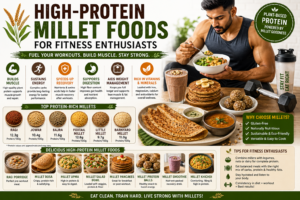
Fitness is no longer just about spending hours in the gym—it’s about building a healthy lifestyle through regular exercise, proper recovery, and balanced nutrition. Whether you’re a bodybuilder, athlete, runner, cyclist, yoga practitioner, or someone pursuing general fitness, the food you eat plays a significant role in achieving your goals.
Protein is one of the most important nutrients for active individuals. It helps build and repair muscles, supports recovery after workouts, and contributes to overall strength and endurance. While many people rely on animal-based protein sources or expensive supplements, plant-based foods can also provide valuable protein along with essential vitamins, minerals, and dietary fiber.
One such group of foods is millets. These ancient grains have been cultivated in India for thousands of years and are now recognized globally for their impressive nutritional profile. Rich in plant-based protein, complex carbohydrates, dietary fiber, antioxidants, and essential minerals, millets provide sustained energy while supporting muscle recovery and overall health.
In this guide, we’ll explore why high-protein millet foods deserve a place in every fitness enthusiast’s diet, the best millet varieties for active lifestyles, and practical ways to include them in your daily meals.
What Are Millets?
Millets are small-seeded cereal grains that have been consumed for centuries across India, Africa, and parts of Asia. They are naturally gluten-free, easy to digest, and highly versatile in cooking.
Popular millet varieties include:
- Ragi (Finger Millet)
- Jowar (Sorghum)
- Bajra (Pearl Millet)
- Foxtail Millet
- Little Millet
- Barnyard Millet
- Kodo Millet
- Proso Millet
Each variety offers a unique combination of protein, fiber, minerals, and antioxidants, making millets an excellent choice for active individuals.
Why Protein Matters for Fitness
Protein is essential because it supports several important functions in the body.
Muscle Growth
Protein provides amino acids that help repair and build muscle tissue after exercise.
Faster Recovery
Post-workout recovery depends on adequate protein intake to repair damaged muscle fibers.
Improved Strength
Consuming sufficient protein supports lean muscle development and overall physical performance.
Satiety
Protein helps keep you full longer, reducing unnecessary snacking and supporting healthy weight management.
Metabolism
The body uses more energy to digest protein than fats or carbohydrates, contributing to a healthy metabolism.
Why Millets Are Excellent for Fitness Enthusiasts
Unlike refined grains, millets offer balanced nutrition that supports an active lifestyle.
Benefits include:
- Plant-based protein
- Complex carbohydrates
- High dietary fiber
- Essential minerals
- Antioxidants
- Long-lasting energy
Millets fuel workouts while providing nutrients that contribute to recovery and overall wellness.
Top High-Protein Millets
1. Ragi (Finger Millet)
Ragi is famous for its exceptional calcium content and moderate protein levels.
Benefits:
- Supports bone strength
- Helps muscle function
- Rich in amino acids
- Excellent for recovery meals
Popular recipes:
- Ragi porridge
- Ragi dosa
- Ragi pancakes
- Ragi smoothies
2. Jowar (Sorghum)
Jowar provides a good balance of protein, fiber, and antioxidants.
Benefits:
- Sustained energy
- Better digestion
- Supports endurance training
Recipes:
- Jowar roti
- Jowar salad bowls
- Jowar khichdi
3. Bajra (Pearl Millet)
Bajra is rich in protein, iron, magnesium, and healthy carbohydrates.
Benefits:
- Muscle support
- Increased stamina
- Supports recovery
Recipes:
- Bajra roti
- Bajra upma
- Bajra porridge
4. Foxtail Millet
Foxtail millet has become increasingly popular among fitness enthusiasts.
Benefits:
- High fiber
- Balanced carbohydrates
- Long-lasting energy
Recipes:
- Foxtail millet pulao
- Millet bowls
- Foxtail upma
5. Little Millet
Little millet offers:
- Protein
- Iron
- Fiber
- Minerals
Ideal for:
- Lunch bowls
- Breakfast dishes
- Meal prep
Nutritional Advantages Beyond Protein
Millets offer more than protein alone.
Dietary Fiber
Supports digestion and keeps you feeling full longer.
Magnesium
Contributes to muscle function and recovery.
Iron
Helps transport oxygen throughout the body, supporting endurance and reducing fatigue.
Calcium
Especially abundant in ragi, helping maintain strong bones and proper muscle contraction.
Antioxidants
Protect cells from oxidative stress generated during intense physical activity.
Millets for Pre-Workout Nutrition
A good pre-workout meal should provide steady energy without feeling too heavy.
Millets are ideal because they contain complex carbohydrates that release energy gradually.
Pre-Workout Meal Ideas
- Millet upma with vegetables
- Foxtail millet bowl
- Ragi porridge with banana
- Millet pancakes with peanut butter
These meals provide sustained fuel for workouts.
Millets for Post-Workout Recovery
After exercise, the body needs carbohydrates to replenish energy stores and protein to repair muscles.
Post-Workout Millet Meals
- Millet khichdi with lentils
- Ragi smoothie with milk and nuts
- Millet salad with chickpeas
- Millet dosa with sambar
Pairing millets with protein-rich foods like lentils, yogurt, tofu, eggs, or paneer creates a balanced recovery meal.
Best High-Protein Millet Recipes
Millet Protein Bowl
Ingredients:
- Cooked millet
- Chickpeas
- Paneer or tofu
- Mixed vegetables
- Lemon dressing
Benefits:
- Balanced protein
- Fiber-rich
- Easy meal prep
Ragi Protein Smoothie
Ingredients:
- Ragi flour
- Milk
- Banana
- Peanut butter
- Chia seeds
Perfect for:
- Breakfast
- Recovery
- Quick nutrition
Millet Vegetable Khichdi
Combines:
- Millet
- Moong dal
- Vegetables
- Mild spices
Provides:
- Protein
- Fiber
- Complex carbohydrates
Millet Energy Bars
Made using:
- Puffed millet
- Dates
- Nuts
- Seeds
Ideal for:
- Gym snacks
- Travel
- Busy schedules
Millets and Weight Management
Many fitness enthusiasts aim to reduce body fat while maintaining muscle.
Millets support these goals because they:
- Increase satiety
- Help regulate appetite
- Provide slow-digesting carbohydrates
- Reduce unhealthy cravings
Replacing refined grains with millets can contribute to a more balanced diet.
Meal Planning with Millets
Breakfast
- Ragi dosa
- Millet idli
- Millet porridge
Mid-Morning Snack
- Millet energy bars
- Roasted millet snacks
Lunch
- Millet rice bowl
- Millet pulao
- Millet salad
Evening Snack
- Millet smoothie
- Millet crackers
Dinner
- Millet khichdi
- Bajra roti with vegetables
- Jowar roti with dal
Tips for Fitness Enthusiasts
Combine Protein Sources
Pair millets with:
- Lentils
- Paneer
- Tofu
- Greek yogurt
- Eggs
- Beans
This improves the overall protein quality of your meal.
Stay Hydrated
Fiber-rich foods work best when combined with adequate water intake.
Prepare Meals in Advance
Cook millet in batches for easy meal prep throughout the week.
Choose Whole Ingredients
Avoid highly processed millet products with added sugar or excess sodium.
Common Myths About Millets and Protein
Myth 1: Millets Don’t Contain Enough Protein
While millets are not as protein-dense as legumes or animal products, they contribute meaningful amounts of plant protein and pair well with other protein-rich foods.
Myth 2: Athletes Need Only Supplements
Whole foods provide a combination of nutrients that supplements cannot fully replace. Protein powders can be useful in some situations, but a balanced diet remains the foundation of sports nutrition.
Myth 3: Millets Are Only for Weight Loss
Millets are beneficial for people with a variety of goals, including muscle gain, endurance training, and overall wellness.
Sustainability: Good for You and the Planet
Millets are not only nutritious but also environmentally friendly.
Compared to many other grains, they generally require:
- Less water
- Fewer chemical inputs
- Better tolerance to drought
Choosing millets supports sustainable agriculture while nourishing your body.
Conclusion
Millets are among the most versatile and nutrient-dense grains available today. Their combination of plant-based protein, complex carbohydrates, dietary fiber, essential minerals, and antioxidants makes them an excellent choice for fitness enthusiasts seeking natural, wholesome nutrition.
Whether your goal is building muscle, improving endurance, managing weight, or enhancing recovery, millet-based meals can become a valuable part of your fitness journey. From ragi smoothies and millet dosas to protein bowls and energy bars, these ancient grains fit easily into modern meal plans.
Remember that no single food is a complete solution. Pair millets with a balanced diet, regular exercise, sufficient sleep, and proper hydration to maximize your performance and long-term health.
Fuel your workouts naturally with the power of millets—and let every meal support your journey toward strength, fitness, and well-being.