
Millet Dosa: A Healthy Twist to Your Favorite Breakfast
Introduction
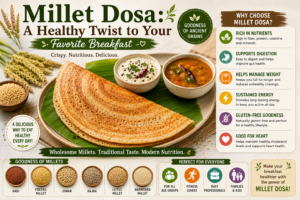
Dosa is one of the most beloved breakfast dishes in India. Crispy, flavorful, and versatile, it has been a staple in South Indian households for generations and is now enjoyed across the world. Traditionally made from rice and urad dal, dosa is not only delicious but also easy to digest and highly satisfying.
As health-conscious consumers look for more nutritious alternatives to refined grains, a new variation has gained immense popularity—Millet Dosa. By replacing rice with nutrient-rich millets, this wholesome version of the classic dosa offers enhanced nutrition without compromising on taste.
Millet dosa combines the goodness of ancient grains with the comfort of a traditional breakfast. Packed with fiber, protein, vitamins, and minerals, it is an excellent choice for anyone looking to improve their diet, manage weight, support digestion, and enjoy sustained energy throughout the day.
In this blog, we’ll explore everything you need to know about millet dosa, including its nutritional benefits, different millet varieties, preparation methods, and why it deserves a place on your breakfast table.
What Is Millet Dosa?
Millet dosa is a healthier variation of traditional dosa made using millet grains instead of or alongside rice. Millets are ancient cereals that have been cultivated in India for thousands of years and are known for their impressive nutritional profile.
Common millets used in dosa preparation include:
- Ragi (Finger Millet)
- Foxtail Millet
- Jowar (Sorghum)
- Bajra (Pearl Millet)
- Little Millet
- Barnyard Millet
- Kodo Millet
These grains are soaked, ground into a batter, fermented, and cooked on a hot griddle to create crispy and flavorful dosas.
Why Millets Are Making a Comeback
For many years, refined grains dominated modern diets because of convenience and availability. However, growing awareness about nutrition has encouraged people to return to traditional foods.
Millets are making a strong comeback because they are:
- Rich in nutrients
- Naturally gluten-free
- High in dietary fiber
- Environmentally sustainable
- Suitable for modern healthy lifestyles
The United Nations even recognized the importance of millets by declaring 2023 as the International Year of Millets, highlighting their role in food security and nutrition.
Nutritional Value of Millet Dosa
One of the biggest advantages of millet dosa is its superior nutritional profile.
Compared to regular dosa, millet dosa generally contains:
More Fiber
Fiber helps improve digestion, supports gut health, and promotes fullness.
Better Mineral Content
Millets provide:
- Calcium
- Iron
- Magnesium
- Phosphorus
- Potassium
Higher Protein
Protein supports muscle maintenance and keeps you satisfied longer.
Antioxidants
Many millet varieties contain antioxidants that contribute to overall wellness.
Health Benefits of Millet Dosa
1. Supports Healthy Digestion
Millet dosa contains significantly more fiber than regular rice-based dosa.
Fiber helps:
- Improve digestion
- Support healthy gut bacteria
- Promote regular bowel movements
- Improve nutrient absorption
A fiber-rich breakfast can help you feel lighter and more energetic throughout the day.
2. Helps with Weight Management
One of the key reasons nutritionists recommend millet dosa is its ability to support healthy weight management.
The fiber and protein in millets help:
- Keep you full for longer
- Reduce unnecessary snacking
- Improve appetite control
- Support balanced eating habits
Replacing refined-grain breakfasts with millet dosa can be a simple step toward healthier eating.
3. Provides Long-Lasting Energy
Unlike refined carbohydrates that release energy quickly, millets are complex carbohydrates.
This means they:
- Digest slowly
- Provide sustained energy
- Reduce mid-morning hunger
- Help maintain productivity
Millet dosa is an excellent breakfast choice for students, professionals, and active individuals.
4. Supports Bone Health
Certain millet varieties, particularly ragi, are naturally rich in calcium.
Calcium plays a vital role in:
- Bone strength
- Teeth health
- Muscle function
- Overall skeletal wellness
Ragi dosa is especially popular among families looking to increase calcium intake naturally.
5. Naturally Gluten-Free
Millets are naturally gluten-free grains.
People looking to reduce wheat consumption often enjoy millet dosa as a nutritious alternative that fits easily into a balanced diet.
6. Supports Balanced Blood Sugar Levels
Many millet varieties have a lower glycemic index compared to refined grains.
This means they release glucose gradually into the bloodstream, providing:
- Steady energy
- Better appetite control
- Reduced energy crashes
This slow-release energy is one reason millet-based breakfasts are gaining popularity.
Types of Millet Dosa
One of the best things about millet dosa is its versatility.
Ragi Dosa
Known for its earthy flavor and high calcium content.
Benefits:
- Rich in calcium
- High in fiber
- Easy to prepare
Foxtail Millet Dosa
A nutritious and light breakfast option.
Benefits:
- Rich in protein
- Supports digestion
- Provides steady energy
Jowar Dosa
Popular for its mild flavor and nutritional value.
Benefits:
- Rich in antioxidants
- Supports digestive health
- Naturally gluten-free
Bajra Dosa
A hearty and filling option.
Benefits:
- Rich in iron
- Supports overall wellness
- High in fiber
Multi-Millet Dosa
Prepared using a combination of different millet varieties.
Benefits:
- Diverse nutrients
- Balanced nutrition
- Enhanced flavor
How to Make Millet Dosa at Home
Ingredients
- 2 cups millet (any variety)
- ½ cup urad dal
- 1 teaspoon fenugreek seeds
- Salt to taste
- Water
Preparation
Step 1: Soak
Soak millet, urad dal, and fenugreek seeds separately for 6–8 hours.
Step 2: Grind
Grind into a smooth batter using water.
Step 3: Ferment
Allow the batter to ferment overnight.
Step 4: Prepare Dosa
Spread the batter on a hot dosa pan and cook until golden brown.
Step 5: Serve
Serve hot with:
- Coconut chutney
- Tomato chutney
- Peanut chutney
- Sambar
Best Side Dishes for Millet Dosa
A delicious millet dosa becomes even better when paired with healthy accompaniments.
Popular choices include:
Coconut Chutney
Provides healthy fats and flavor.
Sambar
Rich in vegetables and protein.
Peanut Chutney
Adds protein and nutty taste.
Mint Chutney
Refreshing and nutrient-rich.
Millet Dosa for Weight Loss
Millet dosa is often included in weight-management meal plans because it:
- Keeps you full longer
- Provides fiber and protein
- Reduces unhealthy cravings
- Supports balanced nutrition
When prepared with minimal oil and paired with nutritious side dishes, millet dosa becomes a wholesome meal that supports healthy eating goals.
Millet Dosa for Children
Children need nutrient-rich foods that support growth and development.
Millet dosa provides:
- Calcium
- Iron
- Protein
- Fiber
Adding vegetables to the batter can further increase nutritional value.
Popular additions include:
- Carrots
- Spinach
- Beetroot
- Onions
Millet Dosa for Busy Professionals
Modern lifestyles often leave little time for elaborate breakfasts.
Millet dosa offers several advantages:
- Batter can be prepared in advance
- Quick cooking time
- Easy digestion
- Long-lasting energy
A nutritious breakfast helps improve focus and productivity throughout the workday.
Why Families Love Millet Dosa
Today’s families are looking for foods that are:
✔ Nutritious
✔ Tasty
✔ Easy to prepare
✔ Suitable for all age groups
✔ Based on traditional ingredients
Millet dosa checks all these boxes while bringing the goodness of ancient grains into modern kitchens.
Tips for Making Perfect Millet Dosa
Use Fresh Ingredients
Fresh millet and urad dal improve flavor and fermentation.
Allow Proper Fermentation
A well-fermented batter creates better texture and taste.
Use a Hot Griddle
Proper heat ensures crispy dosas.
Experiment with Millets
Try different millet combinations for variety.
Add Vegetables
Increase nutrition by adding finely chopped vegetables to the batter.
Millet Dosa vs Regular Dosa
| Feature | Millet Dosa | Regular Dosa |
|---|---|---|
| Fiber | Higher | Lower |
| Protein | Higher | Moderate |
| Calcium | Higher | Lower |
| Minerals | Rich | Moderate |
| Satiety | Better | Moderate |
| Nutrition | More Nutrient-Dense | Good |
Both options can be part of a balanced diet, but millet dosa generally provides additional nutritional benefits.
Conclusion
Millet dosa is a perfect example of how traditional foods can evolve to meet modern nutritional needs. By combining the beloved taste of dosa with the health benefits of millets, this wholesome breakfast offers the best of both worlds.
Rich in fiber, protein, calcium, and essential minerals, millet dosa supports digestion, weight management, sustained energy, and overall wellness. Whether you choose ragi, foxtail millet, jowar, bajra, or a multi-millet blend, this nutritious breakfast can become a valuable part of your daily routine.
As more people embrace healthier eating habits, millet dosa stands out as a delicious and practical choice for families, professionals, students, and fitness enthusiasts alike.
The next time you prepare breakfast, consider giving your favorite dosa a nutritious twist with the goodness of millets.