
Why Millets Are Perfect for Diabetic-Friendly Diets: Benefits, Nutrition, and Healthy Meal Ideas
Introduction
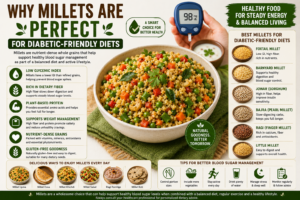
Living with diabetes doesn’t mean giving up delicious food. In fact, choosing the right foods is one of the most effective ways to support healthy blood sugar management and overall well-being. Along with regular physical activity, medication (when prescribed), and medical guidance, a balanced diet plays a vital role in managing diabetes.
One food that has gained significant attention among health-conscious individuals is millets. These ancient grains have been a staple in Indian households for centuries and are now making a comeback because of their impressive nutritional profile. Rich in dietary fiber, plant-based protein, vitamins, minerals, and antioxidants, millets are a wholesome alternative to refined grains.
Many millet varieties have a lower glycemic index (GI) than refined cereals like white rice and refined wheat products. They are also high in fiber, which slows digestion and helps provide a steady release of energy. These qualities make millets a valuable addition to a diabetes-friendly eating pattern when enjoyed in appropriate portions.
In this guide, you’ll learn why millets are often recommended as part of a healthy diet for people with diabetes, the best millet varieties to choose, and practical ways to include them in everyday meals.
What Are Millets?
Millets are small-seeded cereal grains that have been cultivated in India, Africa, and Asia for thousands of years. They are naturally rich in nutrients and adapt well to different climates.
Popular varieties include:
- Foxtail Millet
- Ragi (Finger Millet)
- Jowar (Sorghum)
- Bajra (Pearl Millet)
- Barnyard Millet
- Little Millet
- Kodo Millet
- Proso Millet
Each variety has its own nutritional profile, but all are whole grains that contribute valuable fiber, vitamins, minerals, and plant-based nutrients.
Understanding Diabetes and Blood Sugar
Diabetes is a condition in which the body has difficulty regulating blood glucose (blood sugar).
Carbohydrates from food are broken down into glucose, which enters the bloodstream. Insulin helps move glucose into cells to be used as energy.
Foods that are rapidly digested can cause sharp increases in blood sugar. Choosing whole grains and balanced meals may help support steadier blood glucose levels.
Why Millets Are a Smart Choice for Diabetes-Friendly Diets
1. Rich in Dietary Fiber
Fiber is one of the biggest advantages of millets.
Fiber helps:
- Slow digestion
- Promote fullness
- Support digestive health
- Slow the absorption of carbohydrates
Including fiber-rich foods in meals may contribute to steadier blood sugar responses.
2. Lower Glycemic Index Than Many Refined Grains
Many millet varieties have a lower glycemic index than refined white rice and refined flour products.
Lower-GI foods are digested more slowly, helping reduce rapid spikes in blood sugar after meals.
Remember that cooking methods, portion sizes, and accompanying foods all influence a meal’s overall glycemic impact.
3. Provides Slow and Steady Energy
Millets contain complex carbohydrates that release energy gradually.
Benefits include:
- Reduced energy crashes
- Better satiety
- Longer-lasting energy
- Balanced meals
4. Supports Healthy Weight Management
Maintaining a healthy weight can be beneficial for overall metabolic health.
Millets help because they:
- Keep you full longer
- Reduce frequent snacking
- Increase meal satisfaction
When combined with exercise and healthy eating, millets can support long-term wellness.
5. Rich in Plant-Based Protein
Protein is important because it:
- Supports muscle maintenance
- Promotes fullness
- Helps create balanced meals
Pairing millets with lentils, beans, paneer, tofu, eggs, or yogurt creates a nutritious meal.
6. Packed with Essential Nutrients
Millets naturally contain:
- Magnesium
- Iron
- Zinc
- Phosphorus
- Potassium
- B Vitamins
These nutrients contribute to overall health and normal body functions.
Best Millets for Diabetes-Friendly Meals
Foxtail Millet
Foxtail millet is widely used in balanced meal plans because of its fiber content and versatility.
Best recipes:
- Upma
- Pulao
- Vegetable bowls
Barnyard Millet
Light and easy to cook.
Perfect for:
- Pongal
- Khichdi
- Breakfast bowls
Jowar (Sorghum)
High in fiber and suitable for:
- Rotis
- Salads
- Grain bowls
Bajra (Pearl Millet)
Rich in:
- Fiber
- Protein
- Iron
- Magnesium
Excellent for:
- Rotis
- Khichdi
- Porridge
Ragi (Finger Millet)
Known for:
- High calcium
- Good fiber content
- Versatile recipes
Use in:
- Dosa
- Roti
- Porridge
Healthy Millet Recipes
Millet Upma
A quick breakfast loaded with vegetables.
Millet Dosa
A nutritious alternative to traditional dosa.
Millet Khichdi
Comforting, balanced, and protein-rich when paired with lentils.
Millet Salad Bowl
Combine cooked millet with:
- Cucumbers
- Tomatoes
- Chickpeas
- Olive oil
- Lemon juice
Ragi Porridge
A wholesome breakfast suitable for all ages.
Portion Control Matters
Although millets are nutritious, they still contain carbohydrates.
Healthy portion control remains important.
Tips include:
- Fill half the plate with vegetables.
- Add a source of protein.
- Include healthy fats like nuts or seeds.
- Avoid oversized servings.
Foods That Pair Well with Millets
Balanced meals improve overall nutrition.
Pair millets with:
- Lentils
- Beans
- Paneer
- Tofu
- Eggs
- Fish
- Chicken
- Yogurt
- Vegetables
- Nuts
- Seeds
These combinations provide protein, fiber, and healthy fats that can help make meals more satisfying.
Lifestyle Habits That Support Healthy Blood Sugar
Nutrition works best alongside healthy daily habits.
Focus on:
- Regular physical activity
- Adequate sleep
- Stress management
- Drinking enough water
- Consistent meal timing
Together, these habits support overall metabolic health.
Common Myths About Millets and Diabetes
Myth 1: Millets Cure Diabetes
Millets do not cure diabetes. They are simply one nutritious whole-grain option that can fit into a balanced diet.
Myth 2: You Can Eat Unlimited Millets
Even healthy grains contain carbohydrates.
Portion size remains important.
Myth 3: All Millet Foods Are Healthy
Highly processed millet snacks with added sugar, excess salt, or unhealthy fats are not the same as minimally processed whole millets.
Tips for Cooking Millets
- Wash thoroughly before cooking.
- Soak when needed.
- Cook with vegetables.
- Pair with protein.
- Avoid excessive oil.
- Limit added sugars.
Why Millets Are Sustainable
Millets are also environmentally friendly.
Compared to many major cereal crops, they generally:
- Require less water
- Grow in dry climates
- Need fewer agricultural inputs
Choosing millets supports both personal health and sustainable farming.
Frequently Asked Questions
Can people with diabetes eat millets every day?
Millets can be included regularly as part of a balanced meal plan. Individual needs vary, so it’s best to consult a healthcare professional or registered dietitian for personalized advice.
Which millet is considered best?
Foxtail millet, barnyard millet, jowar, bajra, and ragi are all nutritious options. Variety is often beneficial.
Are millets better than white rice?
Many millet varieties contain more fiber and have a lower glycemic index than refined white rice, making them a wholesome alternative in many meals.
Can millet replace wheat and rice completely?
Millets can replace some or all refined grains depending on your preferences and nutritional needs, but dietary variety is generally recommended.
Conclusion
Millets are among the most nutritious whole grains available and can be an excellent addition to a diabetes-friendly eating pattern. Their combination of dietary fiber, plant-based protein, complex carbohydrates, vitamins, and minerals supports balanced nutrition and provides slow-releasing energy.
While millets are often a healthier alternative to refined grains, they are not a cure for diabetes. Portion size, balanced meals, regular exercise, quality sleep, and medical guidance remain essential components of blood sugar management.
From millet dosa and upma to khichdi, salads, and rotis, these ancient grains offer endless possibilities for creating delicious and nourishing meals. By incorporating a variety of millets into your routine, you can enjoy traditional flavors while supporting your overall health and well-being.